10 Honeypot Token Checker Tools for Safer Research
Compare 10 honeypot token checker tools, interpret scan results, verify contracts manually, and build a safer pre-trade workflow.
GeckoScreener Team
Aug 14, 2026 · 19 min read
Updated about 2 months ago

You're staring at a token that looks active, liquid, and everywhere on the feed, but that still doesn't answer the question, can you sell it back under the contract's actual rules? A honeypot token checker exists to answer that exact question by simulating trades, inspecting permissions, and surfacing risk signals before you commit capital. The catch is that a green result isn't a trading clearance, it's one input, and conflicting results need investigation, not wishful thinking.
That's why the best workflow isn't “pick one scanner and trust it.” It's a layered pre-trade process, fast web scans for a first pass, simulation checks for sellability, code-level analysis for hidden logic, API integrations for automation, chain-specific controls for Solana or EVM, and manual verification when the output looks clean but something still feels off. Modern tools often return a risk verdict instead of a simple yes or no, with categories like unknown through honeypot, plus buy and sell tax figures, blacklist status, mint capability, and owner permissions, which makes interpretation part of the job, not an afterthought, as documented in the honeypot checker overview at OmniRisk's honeypot checker guide.
GeckoScreener fits into that broader research workflow, not the contract-safety step itself. It can support cryptocurrency screening and strategy research, and it includes a built-in honeypot filter in its megafilter, but it doesn't currently offer trading or backtesting features, with backtesting and alerts expected soon.
Table of Contents
- 1. Token Sniffer
- 2. Honeypot.is
- 3. DEXTools Token Safety Checker
- 4. De.Fi Scanner
- 5. GoPlus Security
- 6. RugDoc Honeypot Inspector
- 7. BSCheck
- 8. Quick Intel Smart Contract Scanner
- 9. Dedaub Tok{In}
- 10. Rugcheck.pro
- Top 10 Honeypot Token Checker Comparison
- Turn a Honeypot Check Into a Repeatable Gate
1. Token Sniffer
Token Sniffer is the kind of scanner many traders reach for first because it turns a messy contract review into a quick smell test. Its value is breadth, it runs automated checks across multiple EVM chains and surfaces honeypot flags alongside liquidity, ownership, mintability, and tax signals. The right way to use it is as a fast front door, not a final verdict, especially when a token is obfuscated or the owner has left behind control hooks that aren't obvious at a glance.
Its public web UI makes it useful for a first-pass decision during active market hours, and the product also offers an API for programmatic checks. That workflow matters because a contract can look fine in a charting interface while still hiding transfer restrictions or owner privileges that only show up when the scanner inspects permissions and mint logic. The strongest use case is simple, run it early, then compare it against a second tool before you touch the buy button.
The main weakness is also the reason serious traders keep it in a stack. Automated systems can miss subtle traps or over-flag unusual contracts, so a good result should be treated as a probabilistic signal, not a guarantee. If you're building a pre-trade routine, Token Sniffer is the quick scan, then you escalate to a deeper checker if the token is worth more attention.
A clean scan only means you've reduced uncertainty. It doesn't mean the contract stopped being clever.
If you're comparing it with a broader research workflow, GeckoScreener's meme coin tracker article is a useful adjacent read for how traders organize discovery before any safety check.
2. Honeypot.is
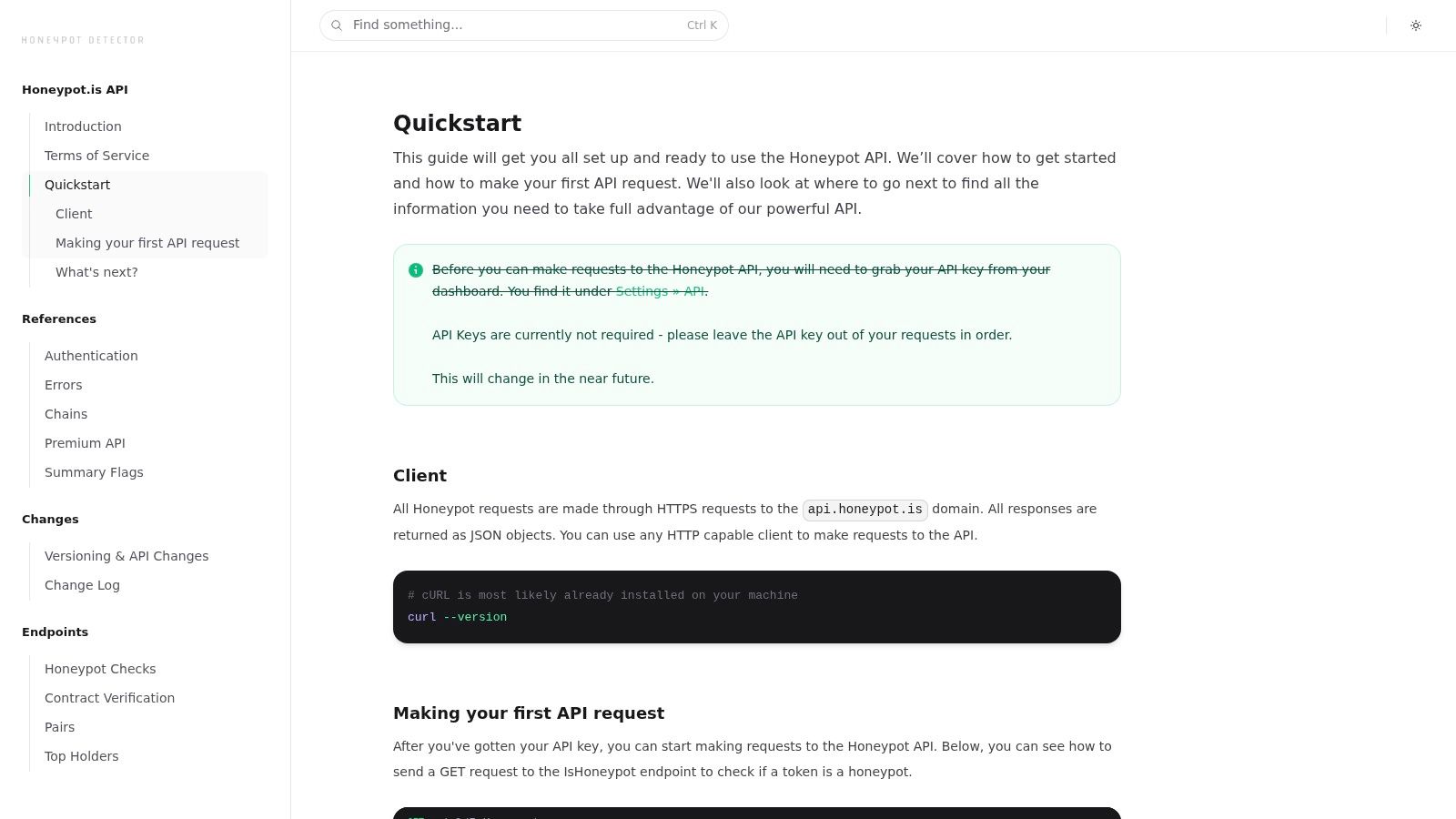
Honeypot.is is the most direct fit when the question is narrow and urgent, is this token a honeypot or not? Its API-first design is built around simulation-based checks, so it tries to answer the actual trade question rather than just label the contract with broad risk language. That makes it especially useful for wallets, bots, dashboards, or any workflow that needs a single verdict dropped into an existing system.
The structure of the response is a strength. The tool can return risk and status fields, plus contract verification and top-holders context, so a caller can look at both the sellability result and the surrounding ownership picture. According to the documentation and reviews in the verified research, modern output can include explicit details like buy and sell taxes, blacklist status, mint capability, and owner permissions, which helps separate “technically sellable” from “economically hostile.”
Where it fits best
This is the integration tool. Use it when you want a one-shot honeypot verdict feeding into a trading interface or an automated triage pipeline. It's not trying to be a full consumer suite, and that's the point, the focused design makes the integration story simpler, but it also means you'll want another scanner for broader contract context.
The trade-off is obvious. You get a tight technical answer, but not a broad visual research experience. That means Honeypot.is works well in a layered setup, one simulation verdict, then a second pass on permissions and liquidity if the token survives the first screen.
If the API says sellability is broken, stop. If it says sellability is possible, keep checking.
For implementation details and endpoint behavior, the most relevant reference is the Honeypot.is quickstart documentation.
3. DEXTools Token Safety Checker
DEXTools' Token Safety Checker matters because it sits where traders already work, inside charting and pair research. That saves a step. Instead of copying a contract address into a separate security site, you can inspect a token's honeypot behavior alongside the price action, buy and sell taxes, verification status, ownership, mintability, and the DEXT Score in the same interface. For many users, that's the difference between checking a token and meaning to check it later.
Why the workflow matters
The main benefit is context. A trade doesn't happen in isolation, it happens while a chart is moving, liquidity is changing, and attention is split, so a built-in safety panel can catch a problem before the user mentally commits to the setup. The tool is also available across multiple chains, including Solana, which makes it useful for traders who don't want to switch platforms just because the token lives on a different network.
The limitation is that convenience can become overconfidence. A quick in-app safety check is not the same thing as a deeper code review, and a score that looks reassuring can still miss a dynamic trap, especially if the contract changes behavior later. That's why DEXTools is best used as the quick screening layer, then paired with a second scanner when the token still looks interesting.
For readers comparing research habits, GeckoScreener's crypto market analysis tools article is a useful companion piece on broader screening workflows.
Use the charting UI for speed, not for closure. A fast verdict is only the first gate.
If you already research pairs in DEXTools, the DEXTools platform gives you the most frictionless way to add honeypot screening without changing tabs.
4. De.Fi Scanner
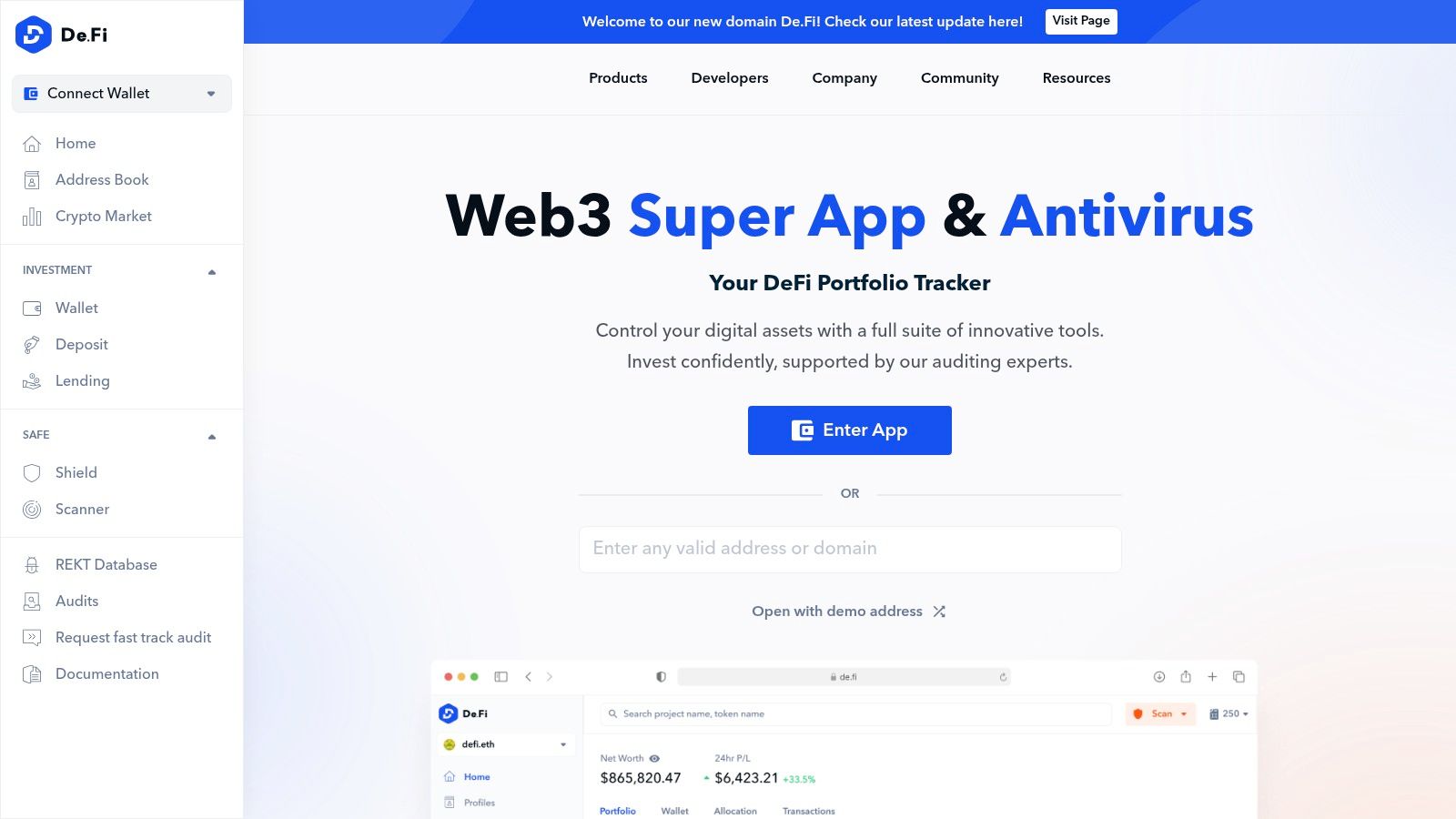
De.Fi Scanner is more than a token checker, it behaves like a security layer wrapped around wallet safety, contract screening, and permissions management. That broader scope matters because a honeypot problem isn't always just a sell restriction. Sometimes the risk sits in minting authority, proxy patterns, or ownership controls that can change the token after launch. De.Fi's scanner flags those patterns while the Shield product adds a separate permissions layer for wallet-level protection.
The benefit is interpretability. Users don't just get a red flag, they get an explanation of the contract behavior that triggered it, which makes it easier to understand whether the risk is a structural trap or just an unusual deployment choice. That's especially valuable for traders who need to decide quickly whether to keep digging or move on.
Best use case in a real workflow
Use De.Fi after the first fast scan, or as the primary scan if you care about wallet permissions as much as token mechanics. It works well when you're screening a new token and want a broader safety picture, not just a honeypot label. The scanner API also makes it relevant for teams and builders who want to embed safety checks into apps or dashboards.
The trade-off is coverage and speed can vary across chains and new tokens, so it's not the tool you use when you want a single ultra-fast answer under pressure. It's more valuable when you want the contract story to be legible before you make a decision.
De.Fi Scanner's platform is the right place to start if you want the scanner, Shield, and API approach together.
5. GoPlus Security
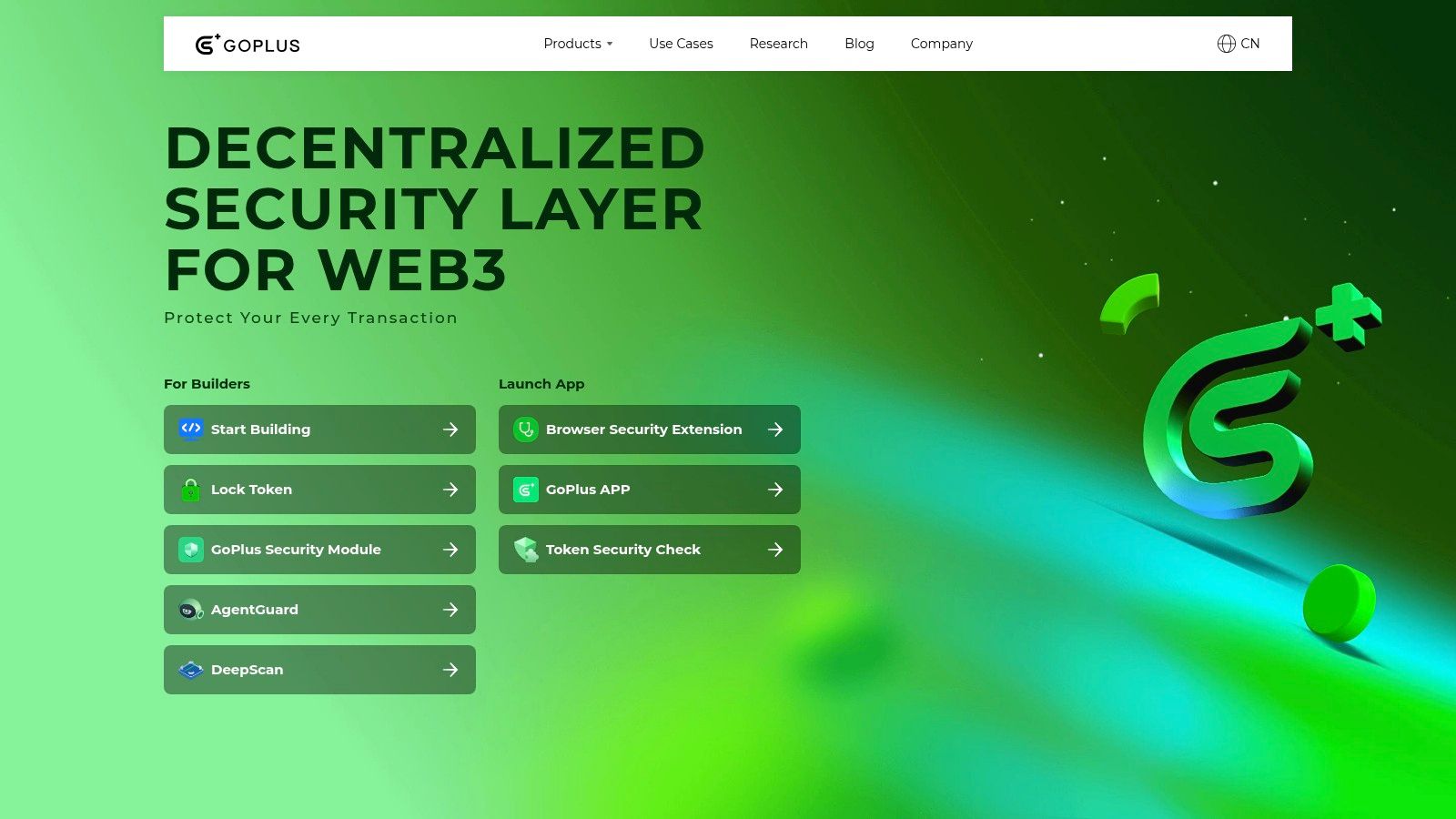
GoPlus Security is best understood as a data layer rather than a standalone consumer scanner. That makes it important in the modern honeypot workflow because a lot of wallets, bots, and third-party apps rely on its token security endpoints behind the scenes. When you see a token risk flag inside another product, there's a decent chance GoPlus is part of the plumbing that surfaced it.
What it contributes
The practical value is breadth. Its token security data can surface honeypot-related flags, blacklist or mint controls, liquidity information, and holder distribution, which gives downstream apps enough context to make a pre-trade warning useful. That's different from a pure yes-or-no simulator, because the goal is to help the consuming app rank risk before the user acts.
This is also why it can be both powerful and frustrating. The API is mature and widely integrated, but the user experience depends on the app that consumes it. If that app presents the data clearly, the checker feels smart and fast. If the app hides the detail, you get a generic warning and lose the nuance that makes the signal actionable.
The right role for GoPlus is as a broad integration layer in a multi-check workflow. Use it when you want token risk data to flow into an interface you already trust, then pair it with a direct simulation tool when you need a second opinion. The bigger lesson from independent research is that honeypot behavior often lives in permissions and transfer logic, so a data layer is useful, but only if someone reads the details.
The GoPlus Security platform is the relevant entry point if you're evaluating its APIs or documentation.
6. RugDoc Honeypot Inspector
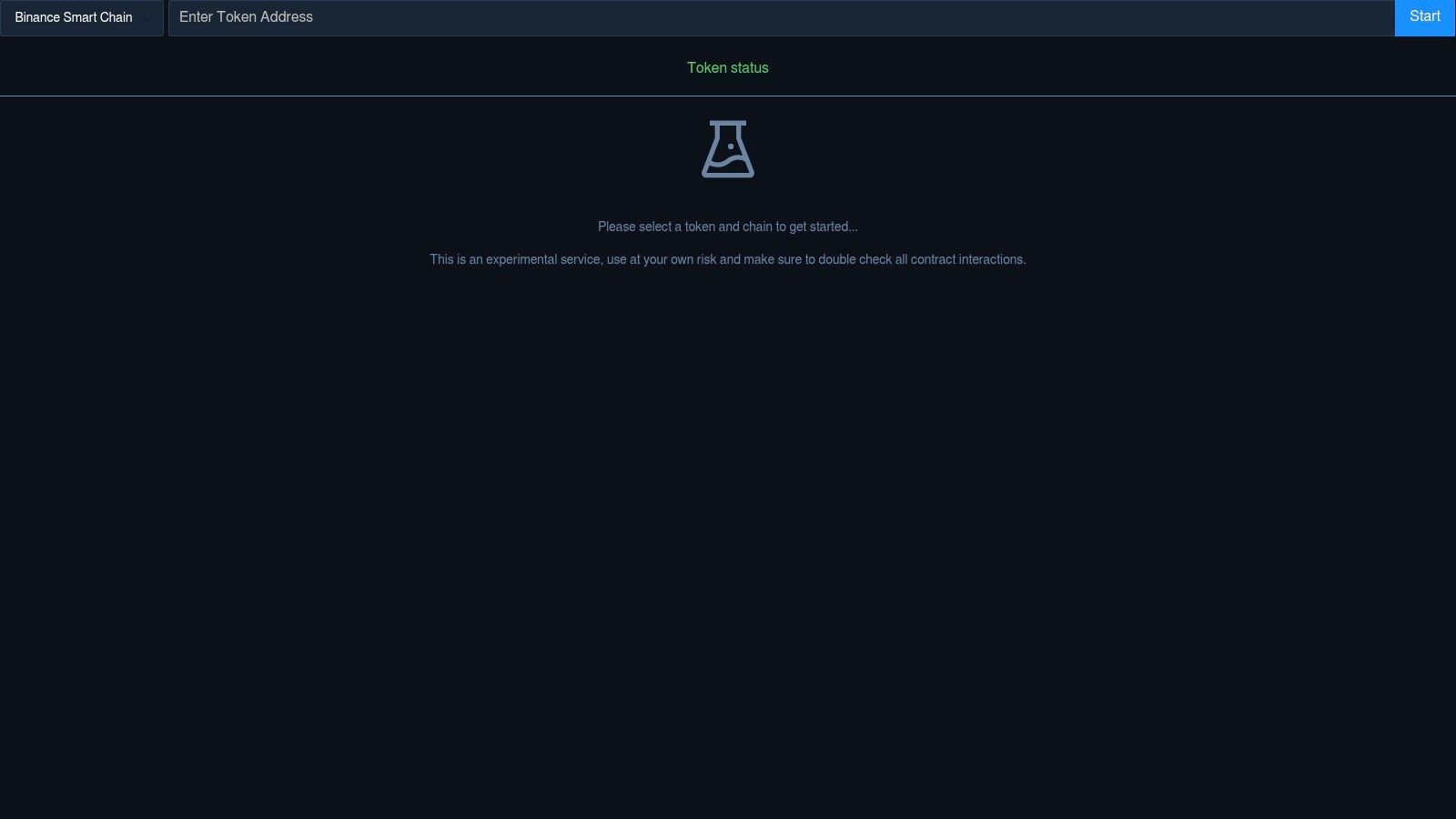
RugDoc's Honeypot Inspector is one of the simplest ways to ask the market's most practical question, can I sell this token back? It does that with simulated buy and sell behavior, which is exactly why it remains relevant even if it lacks the breadth of a full contract analyzer. For BSC and Polygon-style DeFi contexts, that direct sellability test is often enough to decide whether a token deserves deeper review.
Why simplicity helps
A lot of traders don't need a sprawling dashboard at the first step. They need a quick sanity check before they spend more time on a token that may already be dead on arrival. RugDoc is useful there because it keeps the interaction straightforward, no login friction, no long path through features, just a focused honeypot simulation.
The limitation is equally clear. The tool is labeled experimental, so its output should be cross-checked, especially if the token is new, thinly traded, or using nonstandard mechanics. That caveat lines up with independent guidance on honeypot detection, because a single simulation can miss dynamic controls that activate later or only for certain wallets.
A sellability test is a gate, not a verdict on the whole contract.
Use RugDoc for the first “would this exit at all?” question, then pair it with a scanner that checks permissions, taxes, and ownership if the token survives. That layered approach is more reliable than treating one simulation as the final word.
The tool lives at the RugDoc Honeypot Inspector, and the broader rug-pull context is worth reading in GeckoScreener's rug pull guide.
7. BSCheck
BSCheck is the kind of tool that earns a place on a bookmarks bar because it's broad, free, and fast enough for a second opinion. It scans across popular chains and surfaces honeypot, liquidity, and ownership indicators in a way that makes quick comparison easy. That makes it especially useful after a first scanner gives you a result you don't fully trust.
The best use case is redundancy. If one scanner says the token is fine and another shows ownership or liquidity warnings, you've just learned something important, the contract deserves more attention than the first tool suggested. Thin-liquidity environments and noisy new launches create real interpretive problems, because a scanner may be reacting to market structure rather than malice.
Where BSCheck shines
It's good for quick cross-checking on familiar chains like BSC, ETH, Polygon, and Fantom. The public lists, such as recently scanned and newest tokens, also make it easy to compare live market behavior without rebuilding your workflow around the tool. That's helpful for traders who want a broad watchlist view rather than a single-token deep dive.
The downside is terser explanations. If you're newer to contract analysis, a terse warning can be less useful than a tool that names the exact mechanism behind the risk. Even so, BSCheck still has a strong role in a layered process because it can tell you when a second opinion is warranted.
Use the BSCheck token analyzer as a lightweight cross-check, not as the only thing standing between you and a bad trade.
8. Quick Intel Smart Contract Scanner
Quick Intel works well for people who want a broader risk scan wrapped around a dedicated honeypot test. That combination matters because honeypots aren't the only thing that can trap a trader. Duplicate contracts, unusual holder concentration, and contract privilege patterns all contribute to the same practical outcome, a token that looks tradable until you try to exit under pressure.
Why builders like it
The interface is straightforward. One-click scanning is useful for casual users, while the API and Telegram or Discord integrations make it more serious for builders who want alerts piped into existing workflows. The presence of a dedicated honeypot test inside the broader scanner is what gives it value as a middle layer, more focused than a pure security platform, but broader than a single-purpose API verdict.
That said, automation can create false confidence. A clever backdoor doesn't have to look clever in a static scan, and the more a token relies on dynamic behavior, the more likely it is that any one test will miss the trap. That's why Quick Intel should sit between fast web scanning and deeper manual review, not replace either.
If the scanner and the chart disagree, trust the disagreement. That's where the work starts.
Quick Intel's Smart Contract Scanner is the relevant product page if you want the API or messaging integrations.
9. Dedaub Tok{In}
Dedaub Tok{In} stands out because it leans into code-level analysis instead of only surfacing a verdict. That matters for honeypot detection, since hidden behavior often lives in bytecode, and not every scam has a nicely verified source contract waiting to be read. Dedaub's approach is useful when you want an explanation that feels closer to an audit trail than a label.
The strongest part of that workflow is explainability. If a scanner can show why it thinks a token has honeypot or rug-pull risk, then the user can decide whether the warning maps to a legitimate design choice or to a genuine trap. It also checks liquidity across major DEXs, which gives the result more market context than a pure static code pass.
Why code-level analysis matters
A token can pass a superficial buy-sell simulation and still hold hidden logic that changes later through privilege or upgrade paths. Bytecode analysis is one way to catch the hidden layer before you assume the token is safe. That makes Tok{In} especially relevant for EVM and ERC-20 tokens where source visibility is imperfect or incomplete.
The trade-off is scope. It's focused on EVM and ERC-20, so it's not the tool you'd use for Solana or SPL token checks. Advanced users may still need manual review for edge cases, but that's true of almost every scanner once contracts get complex enough.
If you want an explainable, research-backed EVM scanner, Dedaub Tok{In} is the right starting point.
10. Rugcheck.pro
Rugcheck.pro is the most chain-specific tool in this list, and that's its strength. Solana tokens can hide risk through mint authority, freeze authority, or update authority in ways that don't map neatly onto EVM mental models, so a Solana-focused checker is doing a different job from an Ethereum-style honeypot scanner. It's built to surface those SPL-specific control points before a trader assumes liquidity implies safety.
Why Solana needs its own checks
The practical question on Solana isn't just whether a sell route exists, it's whether the token's authorities still let someone alter the rules later. That's why mint, freeze, and update authority visibility matters. If those controls remain live, the token may behave like a honeypot-style trap even without looking like one in a generic scanner.
Rugcheck.pro is fast to use, and that speed matters because Solana traders often move quickly and need a simple paste-and-scan workflow. The output on liquidity state and holder distribution also helps users see whether the token has enough structure to justify deeper attention.
The trade-off is obvious. It's Solana-only, so it doesn't solve multi-chain research. It also shouldn't be used as a standalone substitute for trading history or context, because a clean authority screen doesn't guarantee healthy market behavior.
Use the Rugcheck.pro Solana checker when you need a chain-native read on SPL token control surfaces, then combine it with broader market context before you act.
Top 10 Honeypot Token Checker Comparison
| Tool | Core focus | ✨ Unique selling point | 👥 Best for | ★ Reliability / Depth | 💰 Price / Access |
|---|---|---|---|---|---|
| Token Sniffer | Automated token scanner (honeypot, liquidity, ownership) | ✨ Large scam reference set; clear smell-test scoring | 👥 Traders & quick due-diligence; devs via API | ★★★★☆, fast, widely used (some false positives) | 💰 Free web checks; API for scale |
| Honeypot.is (API) | Simulation-based honeypot verdicts via API | ✨ IsHoneypot endpoint + simulation checks | 👥 Wallets, bots, dashboards (integrators) | ★★★★☆, focused, simulation-led | 💰 Free/keyless docs (subject to change) |
| DEXTools – Token Safety Checker | In-app safety checks tied to charting | ✨ Inline DEXT Score + taxes/verification in-chart | 👥 Active traders researching pairs | ★★★★☆, convenient chart integration | 💰 Freemium, some features behind premium |
| De.Fi Scanner (DeFiYield) | Scanner + wallet permissions manager (Shield) | ✨ Scanner + Shield ecosystem for broader safety | 👥 Traders wanting permission control & scanning | ★★★☆☆, user-friendly but chain depth varies | 💰 Free scanner; paid integrations/API options |
| GoPlus Security | Web3 security data layer (API & UI) | ✨ Mature multi-chain API widely integrated | 👥 Apps, wallets, bots & devs needing data layer | ★★★★☆, robust coverage; app UX varies | 💰 Paid API / tiered integrations |
| RugDoc – Honeypot Inspector | Quick honeypot simulation (sellability) | ✨ Super-fast "can I sell?" sanity check | 👥 DeFi users on BSC/Polygon | ★★★☆☆, experimental; quick checks | 💰 Free, no-login web tool |
| BSCheck | Free multi-chain token analyzer | ✨ Public lists (last scanned, newest, top) | 👥 Casual users seeking second opinions | ★★★☆☆, broad chain support; occasional outages | 💰 Totally free |
| Quick Intel – Smart Contract Scanner | Multi-chain scanner with alerts & bots | ✨ Duplicate-contract detection + Telegram/Discord bots | 👥 Builders, teams needing alerts & automation | ★★★★☆, clear UI + scalable APIs | 💰 Freemium; paid for automation/scale |
| Dedaub Tok{In} | ERC‑20 bytecode & rug-pull analysis | ✨ Explainable, code-level bytecode findings | 👥 Auditors, devs, security-conscious traders | ★★★★☆, strong EVM/ERC‑20 depth | 💰 Free scanner; developer API |
| Rugcheck.pro (Solana) | Solana/SPL token safety checker | ✨ Mint/freeze/update authority & liquidity checks | 👥 Solana traders & analysts | ★★★★☆, fast, purpose-built for Solana | 💰 Free paste‑and‑scan tool |
Turn a Honeypot Check Into a Repeatable Gate
A good honeypot workflow is boring in the best way, because it follows the same sequence every time. Start by identifying the exact contract address and chain, then run at least one simulation-based checker so you know whether the token can be sold. Follow that with an independent scanner, because no single tool is reliable enough to be your only gate.
The next step is to inspect the parts scammers hide behind, buy and sell taxes, owner permissions, mint or freeze authority, blacklists, and any proxy or upgrade patterns that can change behavior later. If the token has liquidity and holder concentration that look abnormal, treat that as part of the risk picture rather than trying to force a clean yes-or-no answer. Independent research keeps pointing to the same underlying issue, honeypot behavior often lives in the contract's control logic, not in the marketing description.
A clean scan is necessary, but it isn't sufficient. You still need to know who can change the rules after launch.
Then record the evidence before you decide. Save the contract address, timestamp, scanner outputs, sellability result, and any unresolved warnings. That habit matters because it lets you compare repeated checks over time, and repeated checks are how you catch tokens that only trap buyers after launch or after a delayed parameter change.
GeckoScreener belongs in this workflow when you're screening the broader top-100 crypto market or shaping structured research around technical setups, not when you're trying to answer the contract-safety question by itself. It currently doesn't offer trading or backtesting features, and those backtesting and alerts capabilities are expected soon, so use it as a screening and research layer while you keep honeypot verification separate.
If you're building a practical pre-trade routine, don't stop at one green badge. Visit GeckoScreener to screen the broader market, then pair that research with a real honeypot check before you put capital at risk.
GeckoScreener Team
Written for the GeckoScreener community. Join us on Telegram →
Related Articles
Start screening cryptocurrencies for free
Apply strategies like this one in real-time across 250+ coins.
Try GeckoScreener →