What Is a Crypto Wallet? Types, Setup, and How Safe It Is
A crypto wallet holds your keys, not your coins. Here's what it is, the types that matter, how to set one up, and the safety steps that actually help.
GeckoScreener Team
Sep 12, 2026 · 13 min read
Updated about 1 month ago
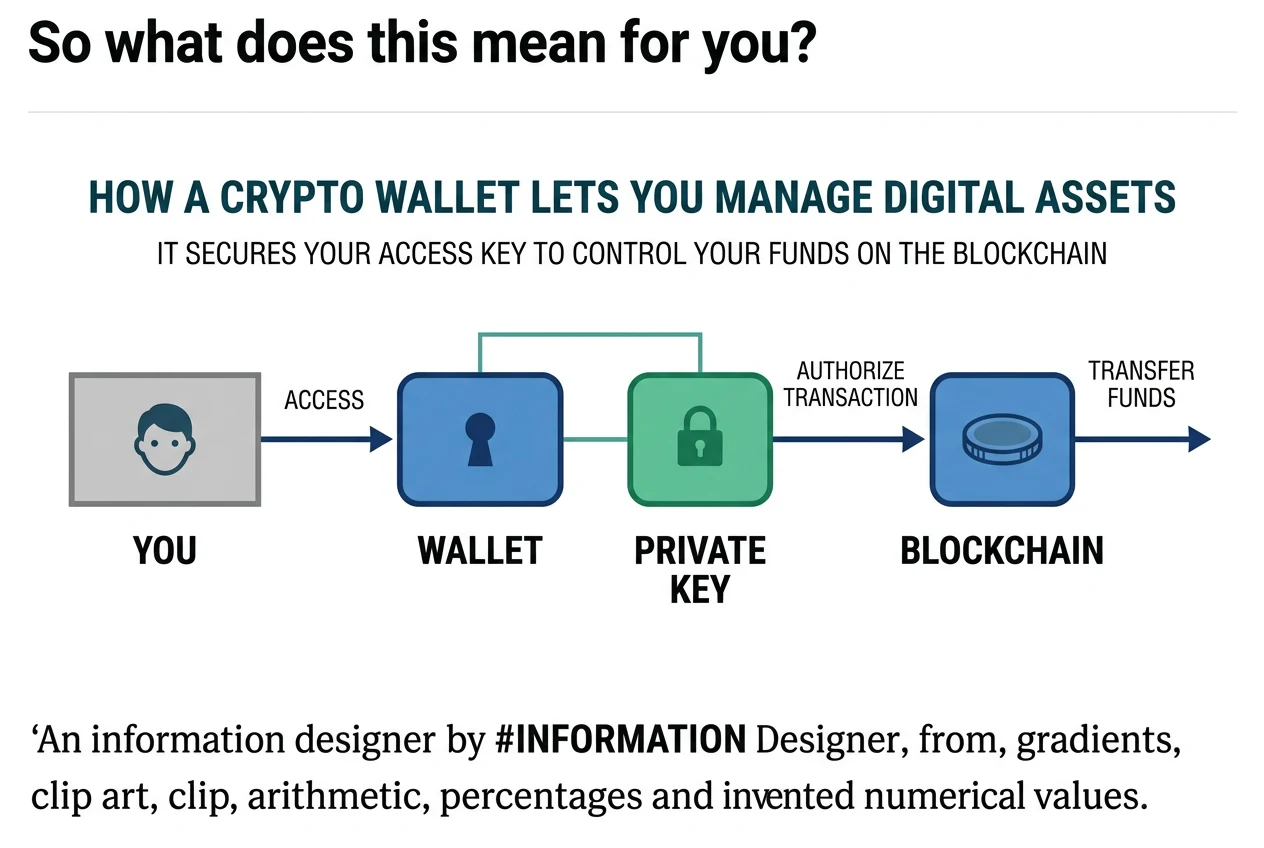
A crypto wallet doesn't actually hold your coins. It holds the private keys that prove you own them and let you move them, the same way a car key doesn't contain the car. That's it. Understand that one distinction, and everything else, the types, the setup, the safety rules, stops being confusing.
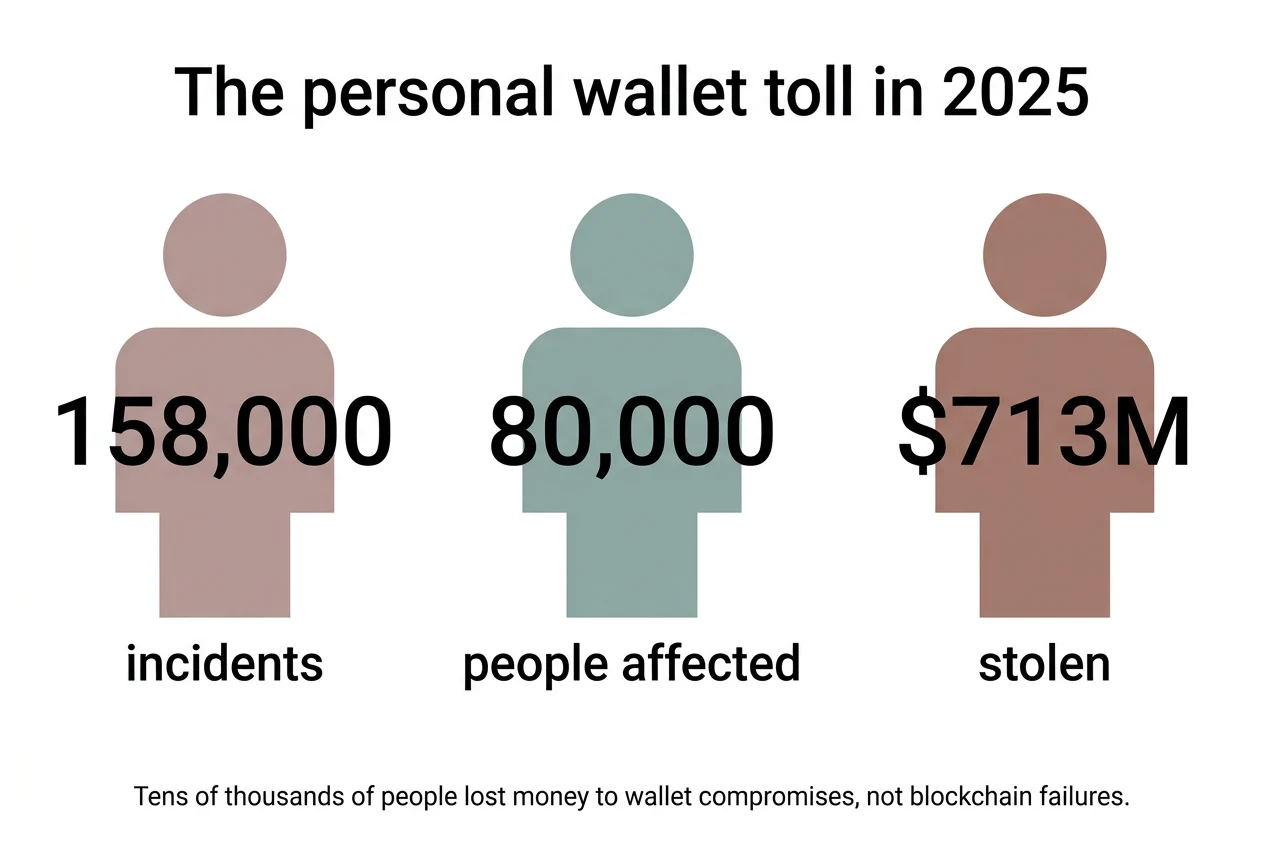
In short: A crypto wallet is software or hardware that stores the private keys controlling your coins, not the coins themselves. Those always live on the blockchain. Wallets split two ways: hot (connected to the internet: mobile, browser, desktop, exchange) or cold (offline: a hardware device or paper). They also split custodial (someone else holds the keys) or non-custodial (you do). Setting one up takes minutes: pick a type, install it from an official source, write down the seed phrase it generates, and fund it. The real risk isn't the blockchain getting hacked. It's the wallet layer around it. Chainalysis puts total crypto stolen in 2025 at over $3.4 billion. One huge exchange breach accounts for much of that dollar figure. But personal-wallet compromises alone hit at least 80,000 people, across 158,000 separate incidents, in that same year. A handful of habits account for most of the difference between the people who lose money and the people who don't: an offline seed backup, a hardware wallet for anything you'd hate to lose, and never typing your seed phrase into anything connected to the internet.
Table of contents
- What a crypto wallet actually is
- How many types of crypto wallet are there?
- How to actually create and use one
- How safe is a crypto wallet, really
- The safety measures that actually cut the risk
- So what does this mean for you?
What a crypto wallet actually is
Think of a blockchain as a public ledger that lists every coin and who now controls it. Your wallet doesn't store a copy of your balance in some private database. It stores a private key instead: a long string of random-looking characters. That key is what proves to the network you're allowed to move a specific set of coins. Lose it and you've lost the coins. Permanently. There's no company to call and no password reset. Someone else gets that key, and they've got your coins too, just as permanently.
Every wallet also generates a public address from that key: the string you hand out to receive money, the same way you'd hand out a bank account number without handing out your PIN. Sharing your receiving address is completely safe. Sharing your private key, or its human-readable form, the seed phrase, is not. That's the same as handing someone a signed blank check.
Practical rule: if anything, an app, an email, a person on a call, ever asks you to type your seed phrase into a website or a form, stop. That's not legitimate. No real wallet provider or exchange will ever ask for it, for any reason.
How many types of crypto wallet are there?
There isn't one clean list, because wallets split along two separate axes, and most real products are a specific combination of both.
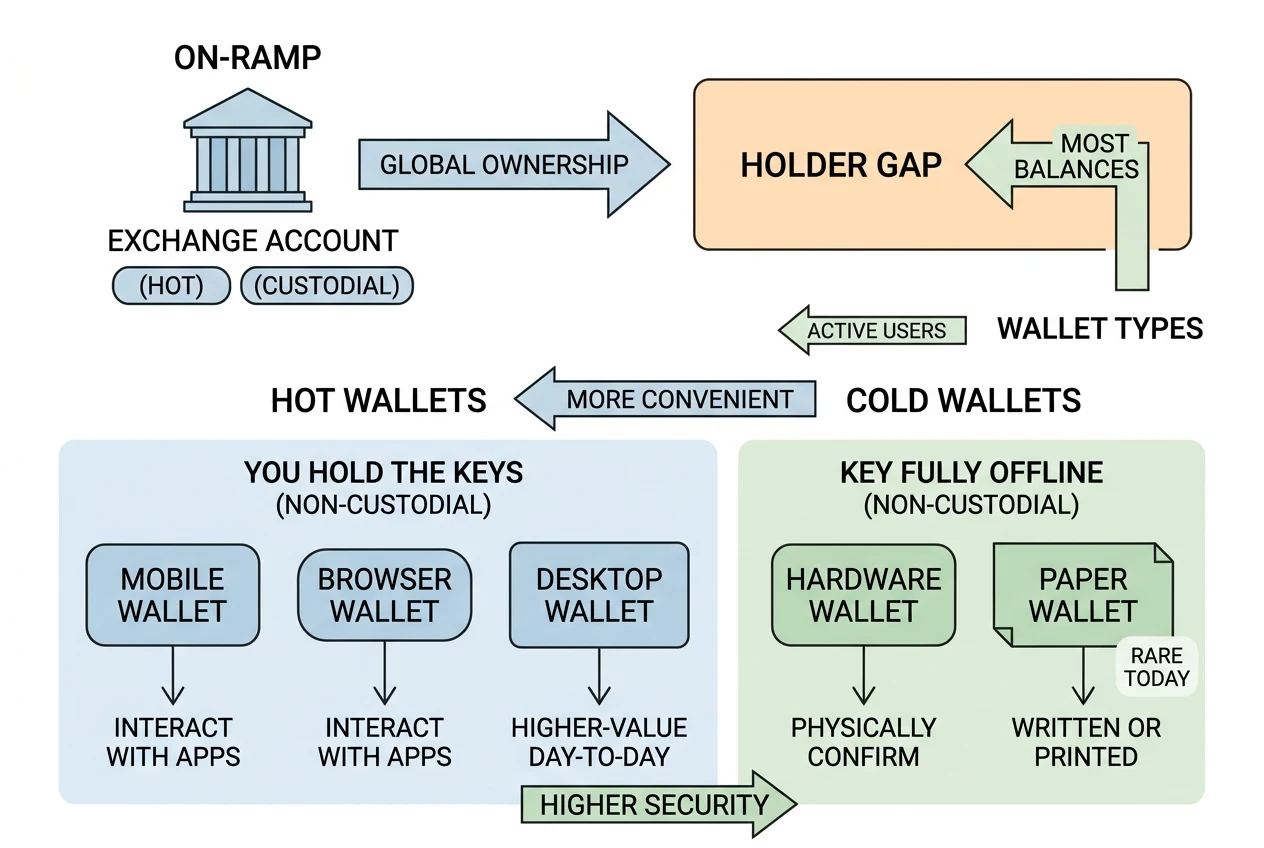
Hot versus cold is about whether the keys ever touch the internet. A hot wallet keeps keys on an internet-connected device, so you can sign a transaction in seconds. That's a mobile app, a browser extension like MetaMask, a desktop program, or the balance sitting in your exchange account. The convenience is also the exposure: malware, a phishing site, or a compromised device can reach those keys. A cold wallet keeps the keys somewhere that's never connected. Think a hardware device like a Ledger or Trezor, or even a private key written on paper. A transaction has to be physically approved on the device itself before it goes anywhere. Most people start hot. It's the path of least resistance. They move some or all of a balance to cold storage once it's worth more than the inconvenience.
Custodial versus non-custodial is about who actually holds the key. On a custodial wallet, like the balance you see in a Coinbase or Binance app, the exchange holds the private keys on your behalf. You get a username and password, and account recovery if you forget it. Someone to call, too, if something looks wrong. But you're trusting that company's security and solvency with your coins. On a non-custodial wallet, MetaMask, Trust Wallet, Phantom, or a hardware device, you generate and hold the key yourself. Nobody can freeze it. Nobody can reset it for you either.
Put the two axes together and you get the wallets people actually use day to day:
- Exchange account (hot, custodial). The easiest on-ramp, and where nearly everyone starts. Crypto.com's own market-sizing research put global crypto ownership at 741 million people by the end of 2025, up from 659 million in 2024. But owning isn't the same as actively using a wallet. A widely cited a16z estimate from late 2024 put monthly active crypto wallet users closer to 30 to 60 million, against several hundred million people who hold something. Most of that gap is exchange balances nobody has touched since they bought.
- Mobile or browser wallet (hot, non-custodial). You hold the keys, the app just makes signing a transaction convenient. This is the default for interacting with apps built on a blockchain directly.
- Desktop wallet (hot, non-custodial). Same idea, running on a computer instead of a phone. Less common now than mobile, but still used for higher-value day-to-day management.
- Hardware wallet (cold, non-custodial). A dedicated device that keeps the key fully offline and only signs a transaction when you physically confirm it on the device.
- Paper wallet (cold, non-custodial). A private key or seed phrase written or printed and stored physically, with no software involved at all. Rare today outside long-term cold storage, because generating one safely is easy to get wrong.
There's a sixth pattern worth knowing, even though it isn't a separate product: multisignature (multisig). A multisig transaction needs approval from more than one key, sometimes held on different devices in different places, before it goes through. It's more setup than most beginners need. But it removes the single point of failure a normal wallet has, which is exactly why it shows up in the safety section below.
How to actually create and use one
The mechanics are the same regardless of which type you pick.
- Decide what the wallet is for first. Spending money day to day and holding savings for years call for different tradeoffs. It's normal, and common among people who've been doing this a while, to run more than one wallet. A hot one for small, frequent amounts. A cold one for anything you'd genuinely hate to lose.
- Get the app or device from the official source only. The vendor's own website, or the genuine listing in the Apple App Store or Google Play. Fake wallet apps that look identical to the real thing are a known scam pattern. Check the developer name and the review count, not just the icon, before installing anything.
- Let it generate the wallet, and write the seed phrase down the moment it appears. Almost every non-custodial wallet gives you a 12- or 24-word seed phrase on first setup. That phrase, not your password, is what actually recreates your wallet on any device. Write it by hand on paper. Not a screenshot, not a note-taking app, not a photo, and definitely not an email to yourself.
- Fund it. Either buy crypto on an exchange and send it to your new wallet's address, or have someone send coins directly to that address. Copy addresses by pasting, never retyping. Check the first and last few characters match before you confirm a send. Malware that silently swaps a copied address for an attacker's is common enough that this one check matters.
- Send a small test amount first, especially the first time you use a new address or a new wallet. It costs a little in network fees but it's the cheapest insurance available against a typo or a copy-paste error on a transaction you can't undo.
- From there, sending and receiving is the same two actions every time: share your address (or scan a QR code of it) to receive, and paste an address plus an amount, then confirm, to send. On a hardware wallet, that confirmation happens on the physical device's screen. That's the whole point: malware on your computer can show you one address while the device shows you the real one.
How safe is a crypto wallet, really
The blockchain itself is hard to break. The wallet layer around it is where almost every real loss actually happens.
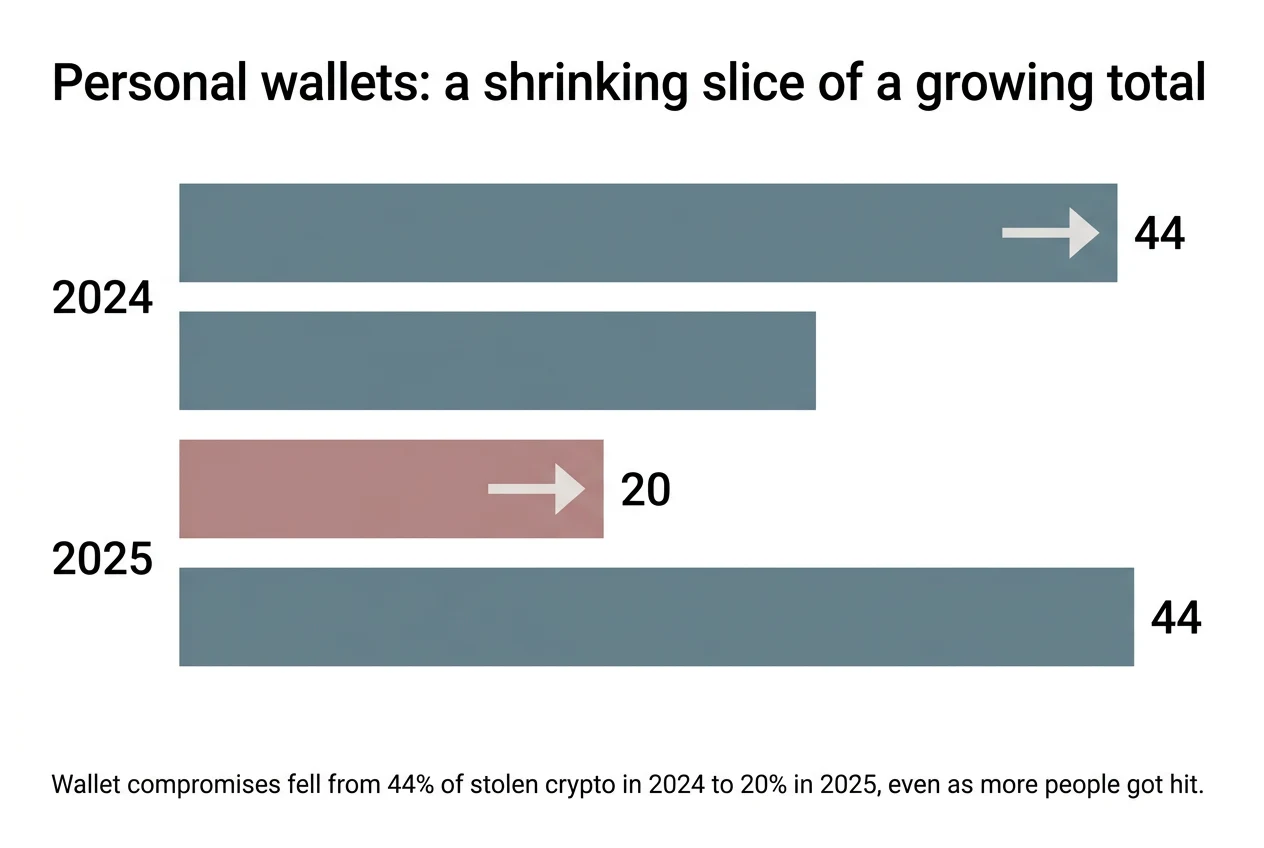
Chainalysis puts total crypto stolen across 2025 at over $3.4 billion. A single breach accounts for close to half of that figure on its own: the $1.5 billion theft from the exchange Bybit in February, attributed to a North Korea-linked group. It's already the largest single crypto theft on record. North Korea-linked hackers took roughly $2 billion in crypto across 2025, a 51% jump on the year before. Strip that one mega-hack out, though, and the more useful number for a person is the personal-wallet figure. Chainalysis tracked 158,000 separate wallet-compromise incidents in 2025, hitting at least 80,000 people and totaling $713 million. That's actually a smaller share of total losses than in 2024: 20% against 44%, even as the number of people affected kept climbing. What's shifted isn't that wallets got less safe. It's that criminals have spread out from a few huge exchange heists to large numbers of people, each losing less.
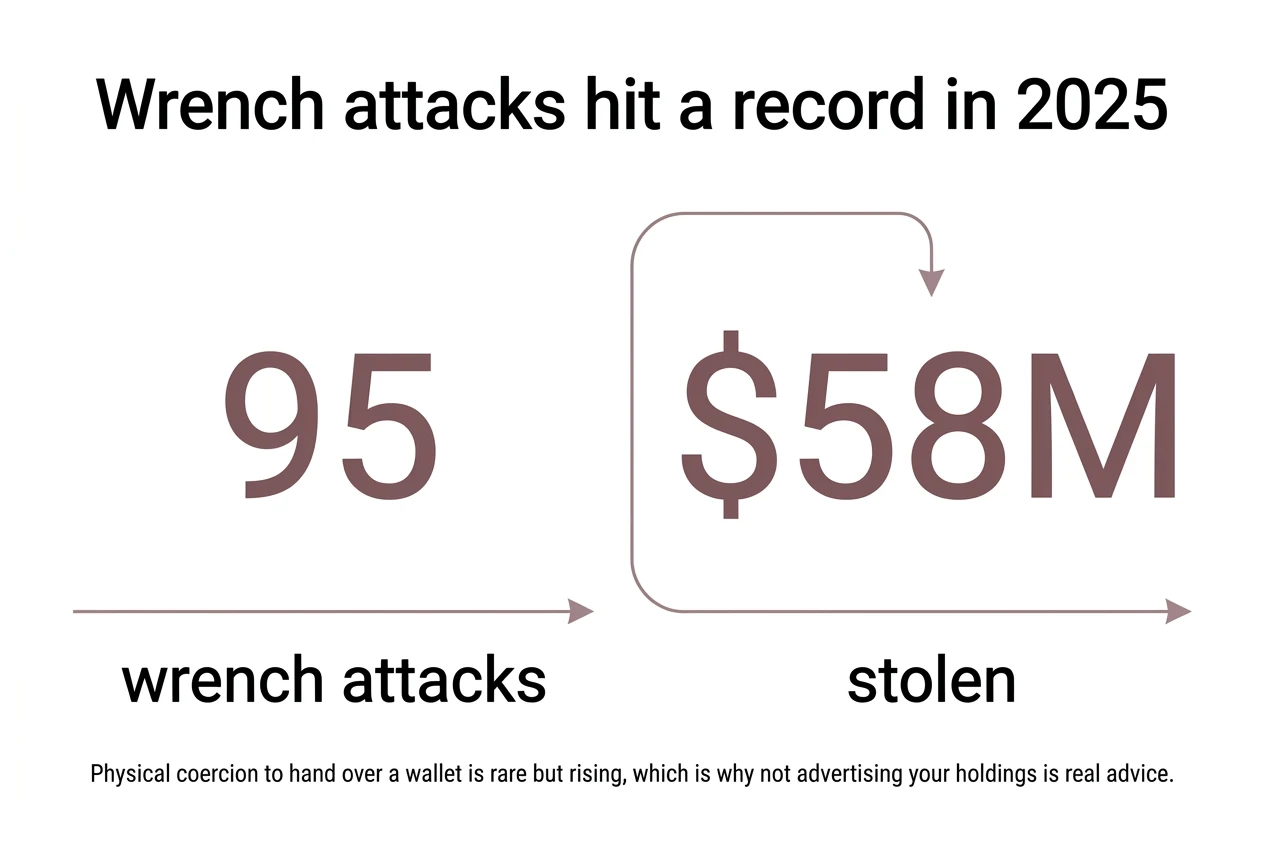
None of that means a wallet is inherently unsafe. It means the two most common failure modes are boring and preventable. Someone gets tricked into typing their seed phrase somewhere they shouldn't. Or someone leaves a large balance sitting on a hot, custodial exchange account that later gets hacked or collapses. That's the same pattern this project's guide to crypto investment covers through the FTX and exchange-hack numbers. A properly stored hardware wallet, keys generated offline and never typed into a connected device, has no equivalent public record of being remotely drained at scale. The failures that do happen to hardware-wallet users are almost always physical: a lost device, a badly stored seed phrase, or someone giving up the phrase under pressure or deception. That's now common enough to have its own name. Chainalysis tracked 95 of these so-called "wrench attacks" in 2025, physical coercion used to force someone to hand over a wallet. It added up to $58 million stolen, the highest on record for that method.
The safety measures that actually cut the risk
Practical rule: every measure below exists to stop one of two things: your seed phrase leaving your control, or a transaction going somewhere you didn't intend. If you only have time for two, do the first two.
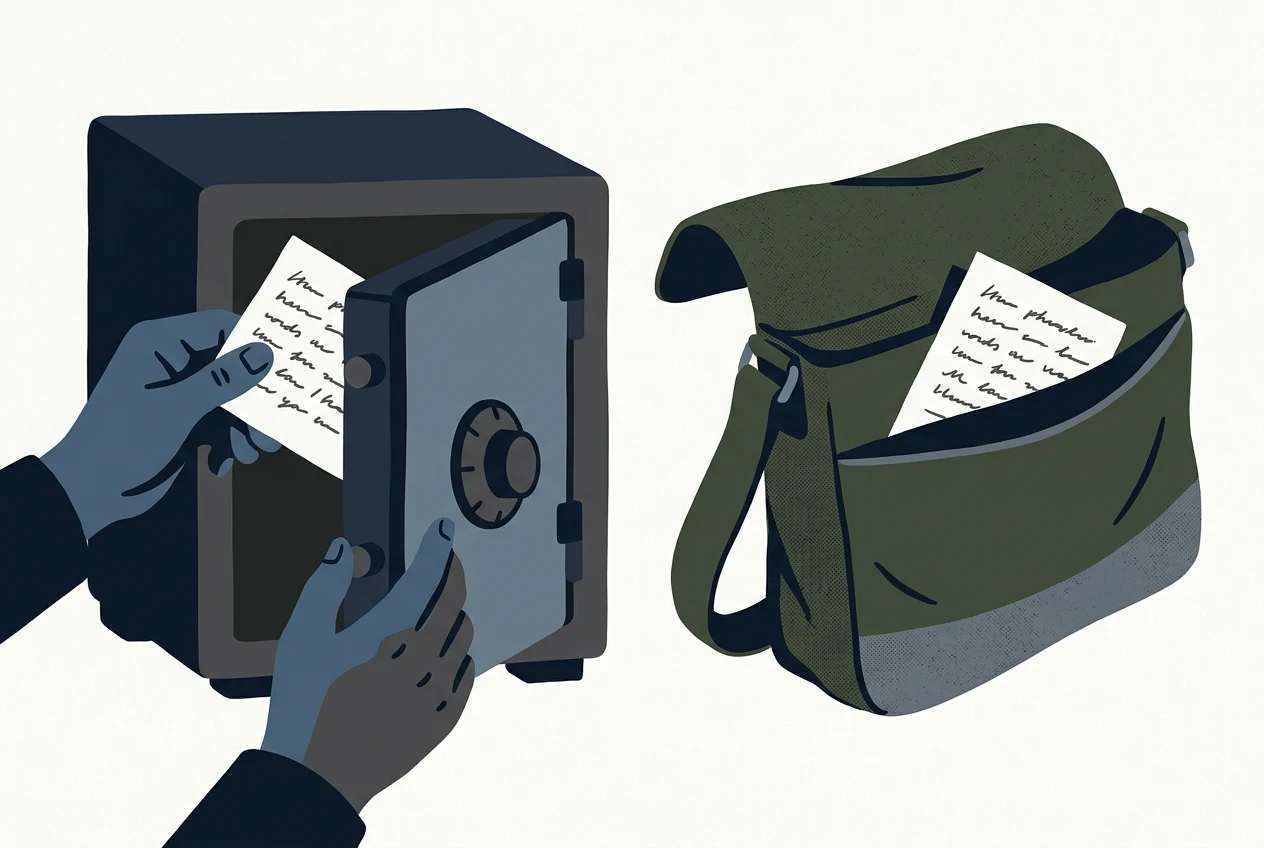
- Keep the seed phrase offline, on paper or stamped metal, never digital. No screenshot, no cloud note, no password manager entry, no email draft. A phrase that only ever exists on paper can't be stolen by malware, a data breach, or a phishing site. It was never typed into anything connected to the internet.
- Keep more than one copy, in more than one physical place. A single copy is one house fire or flood away from being your only backup and your entire loss at once. Security researchers who specialize in this recommend at least two geographically separated copies. Some holders also add a passphrase on top of the standard seed phrase, an extra, memorized layer that isn't written down anywhere.
- Move anything you'd hate to lose off the exchange and into a wallet you control. Custodial is fine for a small amount you're actively using or still learning with. Past that, the exchange holding your coins is one more entity, with its own hacking and insolvency risk, standing between you and your money.
- Verify every address before you send, and test small first. Address-swapping malware and copy-paste errors are both common and both irreversible once a transaction confirms. Checking the first and last few characters, and sending a small test amount on a new route, catches nearly all of it.
- Use an authenticator app, not SMS, for any account tied to your crypto. SIM-swap attacks, where someone convinces your phone carrier to move your number to their device, are a known way around SMS-based two-factor authentication. They specifically target people known to hold crypto.
- Revoke old token approvals periodically if you use wallets that connect to apps. Approving a smart contract to spend your tokens, common when using decentralized exchanges or lending apps, can leave a standing permission active long after you've stopped using that app. Reviewing and revoking unused approvals closes a door that's easy to forget was ever opened.
- Consider multisig or a split-backup scheme (like SLIP-39 Shamir sharing) once the amount justifies it. Both remove the single point of failure a normal wallet has: no one lost device, stolen phrase, or coerced disclosure is enough on its own to move the funds.
- Don't advertise what you hold. The rise in physical "wrench" attacks tracks people who made their holdings visible, on social media, in public forums, or by cashing out at a physical meetup. A decoy wallet with a small balance, kept separate from the real one, is a genuine defense against being forced to unlock a device under threat. It isn't paranoia.
So what does this mean for you?
If the question that brought you here was simply what a crypto wallet is, the short version holds up under all of the above. It's the thing that holds your keys, not your coins. Which type you pick matters far less than how carefully you handle the seed phrase and where you keep the bulk of what you own. Start with whatever's easiest, an exchange account or a mobile wallet, for a small amount while you're learning. Move to a hardware wallet, with the seed phrase backed up offline in more than one place, once the amount would actually hurt to lose.
If you're deciding how much to actually put into crypto in the first place, and how custody fits into that decision, crypto investment covers the sizing and the buy-and-hold mechanics this post assumes. If spending what's in your wallet is the actual goal, pay with crypto covers where that's legal and how the payment itself moves. And if you're still working out what the asset in the wallet even is, what crypto currency actually is is the place to start.
GeckoScreener Team
Written for the GeckoScreener community. Join us on Telegram →
Related Articles

Start screening cryptocurrencies for free
Apply strategies like this one in real-time across 250+ coins.
Try GeckoScreener →