Top 5 Crypto News Platforms in 2026
The five crypto news platforms worth actually following in 2026, what makes each one different, and where to find their socials and Telegram channels.
GeckoScreener Team
Sep 15, 2026 · 9 min read
Updated about 1 month ago
If you typed "crypto news" into a search bar at 6 a.m. because the market moved and you had no idea why, you don't need another price chart. You need to know which sites are worth opening first. Below are the five that most traders bookmark anyway. What each one is actually good at, and their socials and Telegram channels, so you don't have to go hunting for them separately.
In short: CoinDesk and Cointelegraph give you the broadest daily headline coverage. The Block is where institutions go for data-backed reporting. Decrypt writes for readers who don't want jargon. CryptoPanic isn't a newsroom at all. It's an aggregator that pulls from all of the above and lets the crowd vote on whether a headline is bullish, bearish, or just noise. All five have an X account and a Telegram channel, and three of the five push alerts straight to your phone.
Crypto markets don't close, and neither does the news that moves them. A regulatory headline at 2 a.m. can undo a week of careful chart reading. So can a stablecoin depeg on a Sunday. The traders who don't get blindsided are usually the ones with one or two of these open in a tab. None of them will tell you what to trade. They'll tell you what just happened, and that's a different, more useful job.
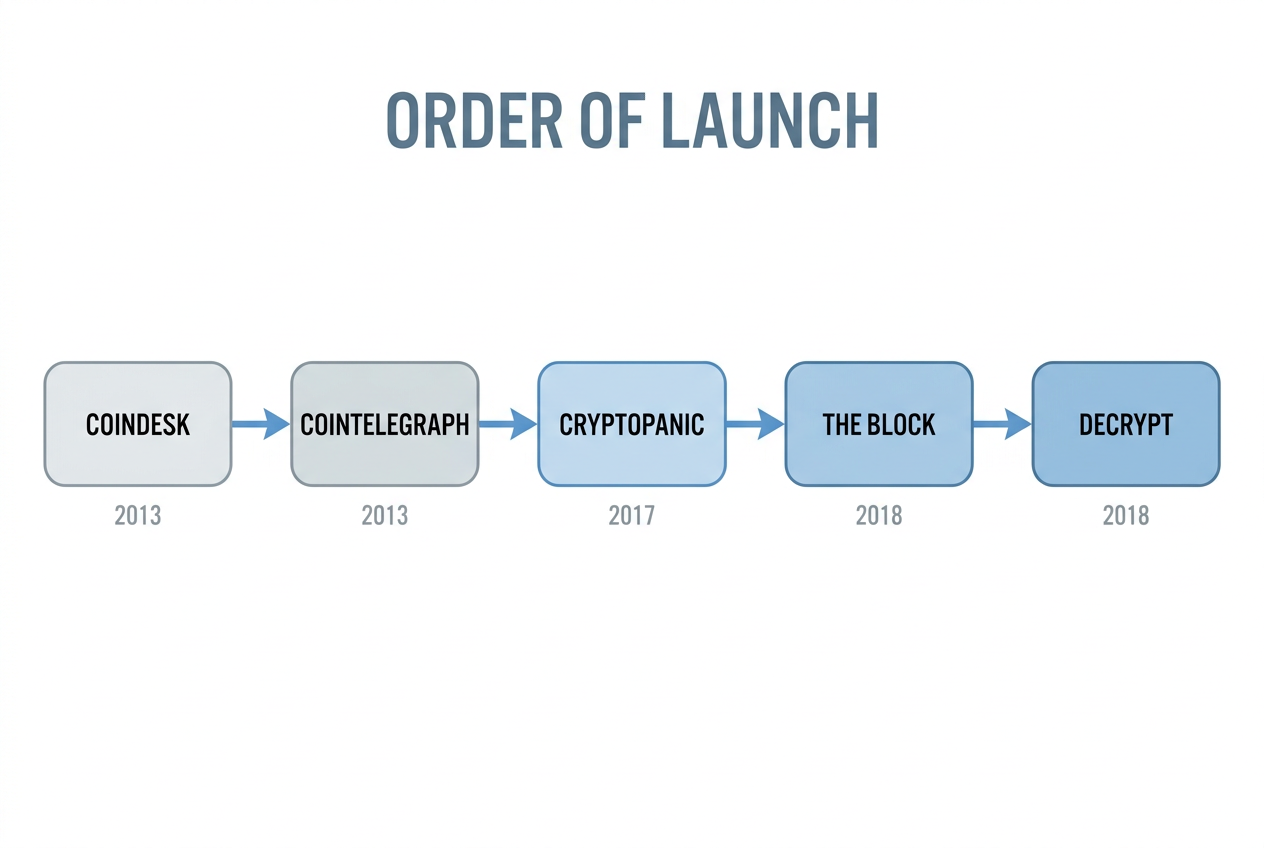
Table of contents
- 1. CoinDesk: the biggest wire in crypto news
- 2. Cointelegraph: the one that reaches the most people, in the most languages
- 3. The Block: the one institutions actually read
- 4. Decrypt: the plain-English one
- 5. CryptoPanic: the aggregator that scores the news instead of just reporting it
- How the five compare
- Which one should you actually follow
1. CoinDesk: the biggest wire in crypto news
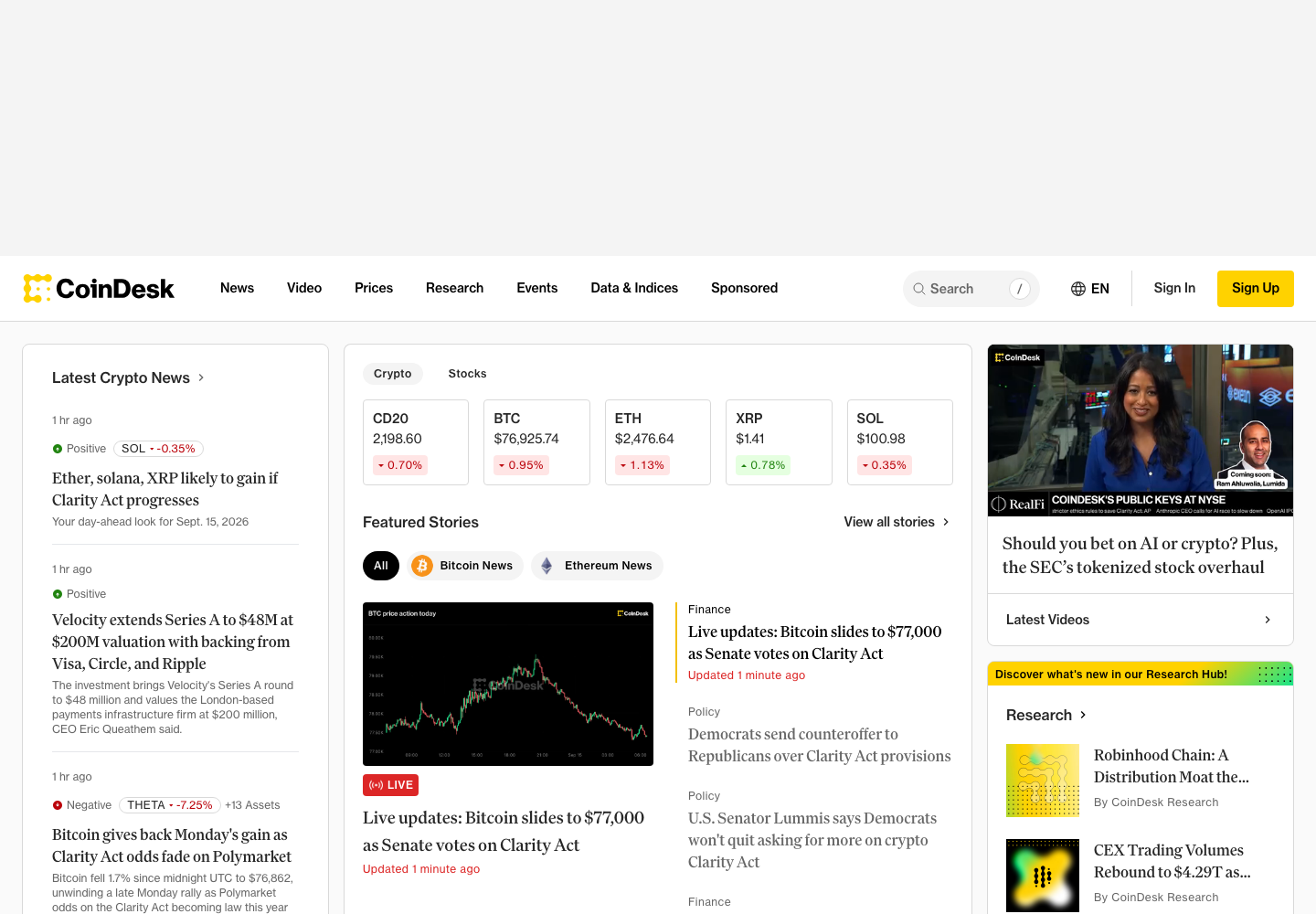
CoinDesk started publishing in May 2013, which in crypto years makes it practically ancient. It still runs one of the largest dedicated crypto newsrooms anywhere. The homepage shows you what it's built for: live prices for BTC, ETH, XRP and SOL sit right at the top, and under them is a wall of stories updated by the minute, tagged by desk so you can skip straight to what you care about.
Ownership has changed twice. Digital Currency Group bought it from founder Shakil Khan in 2016, and Bullish, the crypto exchange, bought it from DCG in November 2023 for cash. CEO Kevin Worth and the newsroom stayed in place as an independent subsidiary.
That ownership change is worth knowing about. It came up again in December 2024, when Bullish reportedly had an article about Tron founder Justin Sun pulled after his team complained, and three top editors left days later. Readers noticed, and so should you. That doesn't erase the depth of the daily coverage. It's just a reason to read CoinDesk alongside something else, not as your only source.
What actually sets it apart: a dedicated Research arm and a Data & Indices tab, including its own CD20 index tracking the top 20 assets, plus regular events like Consensus that most other outlets only report on secondhand.
Socials: X at @CoinDesk. Telegram: the official channel is CoinDesk Global, which mirrors the front page in real time so you get headlines without opening a browser tab.
2. Cointelegraph: the one that reaches the most people, in the most languages
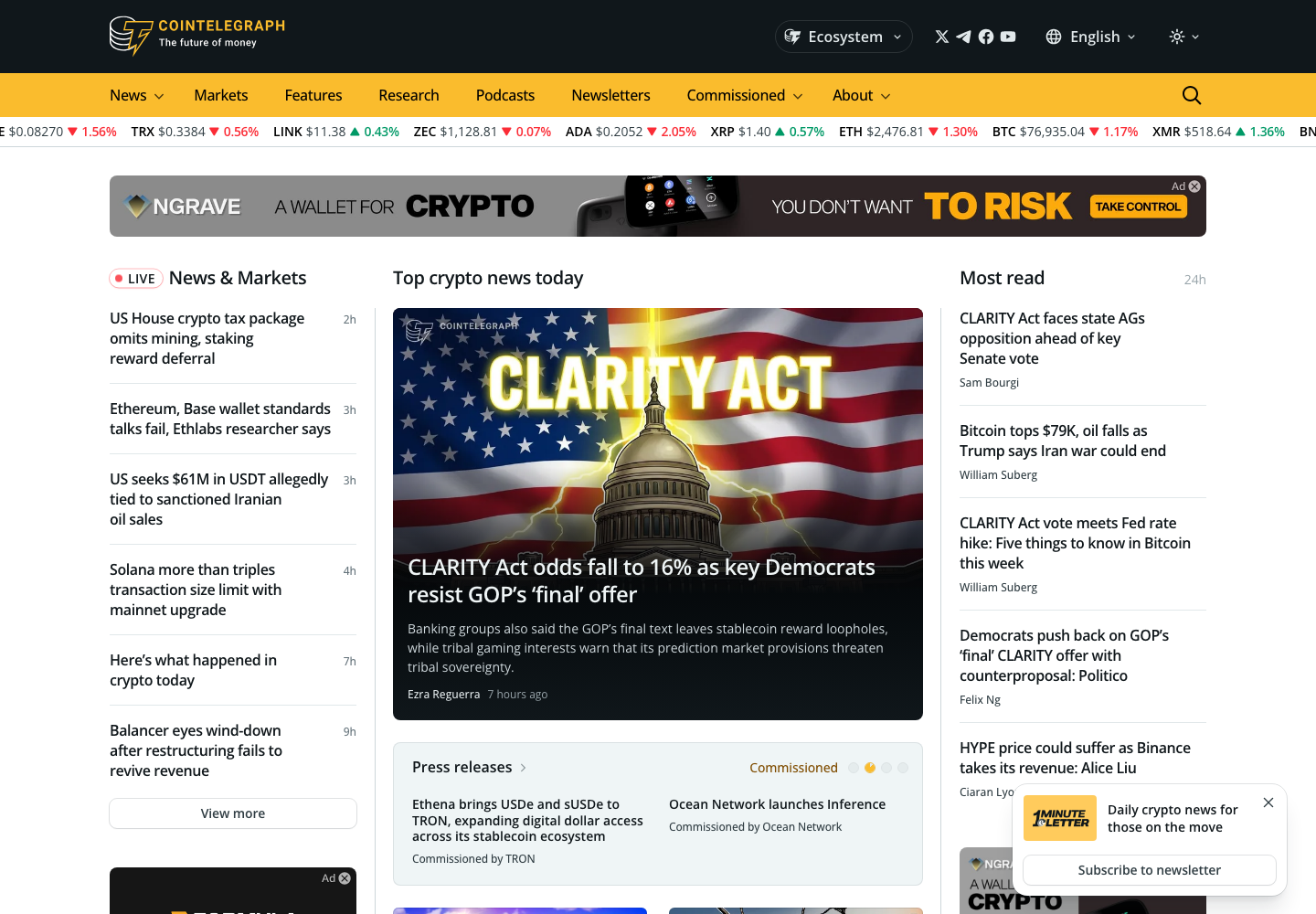
Cointelegraph launched the same year as CoinDesk, 2013, and took a different visual bet from day one. Bold illustrations and infographics, instead of a plain wire-service look. That style is still the easiest way to tell a Cointelegraph story from a competitor's at a glance, and it's part of why the site has grown into a genuinely global outlet rather than just an English-language one.
Coverage runs across 15 separate language editions, including Spanish, Japanese, Korean, Arabic, Hindi and Chinese. Each edition has its own team, not a machine translation bolted onto the English site. If your audience or your own reading isn't English-first, that's the practical reason to pick Cointelegraph over the others here.
What actually sets it apart: the 15-language footprint, plus a research division and its own accelerator and events program sitting alongside the daily news.
Socials: X at @Cointelegraph, Instagram at @cointelegraph with around 415,000 followers. Telegram: the official channel, @cointelegraph, has over 340,000 subscribers, making it one of the bigger crypto news channels on the platform.
3. The Block: the one institutions actually read
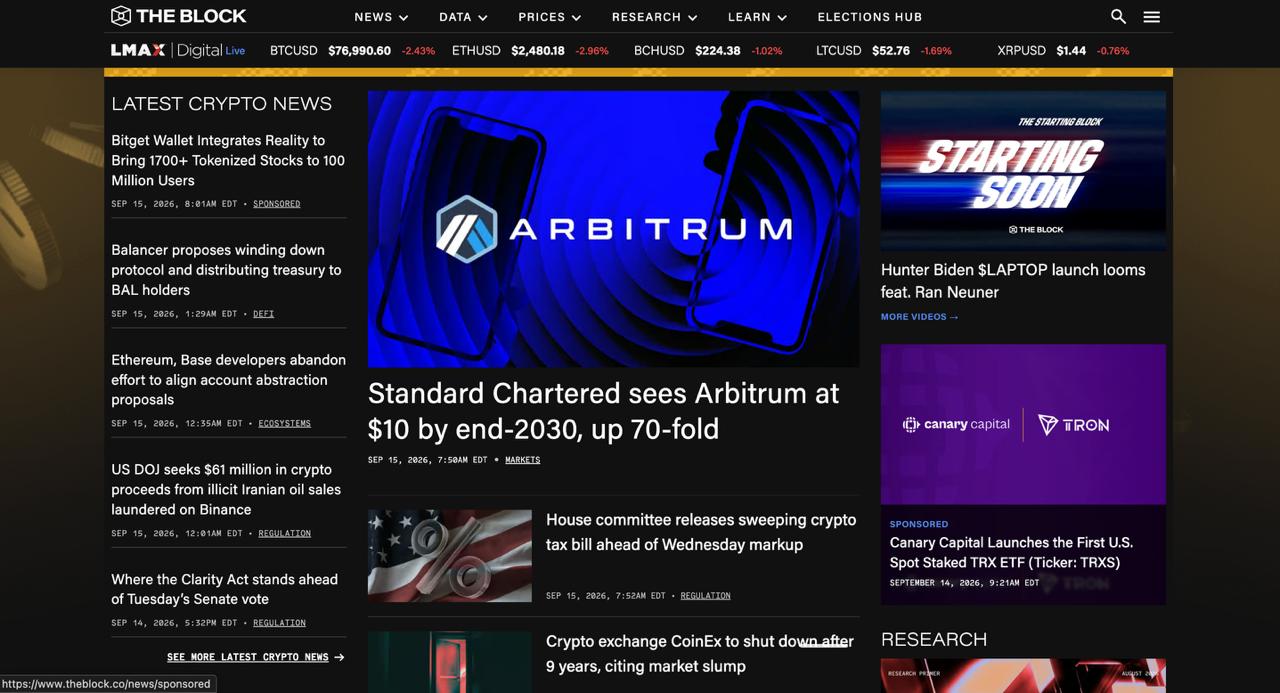
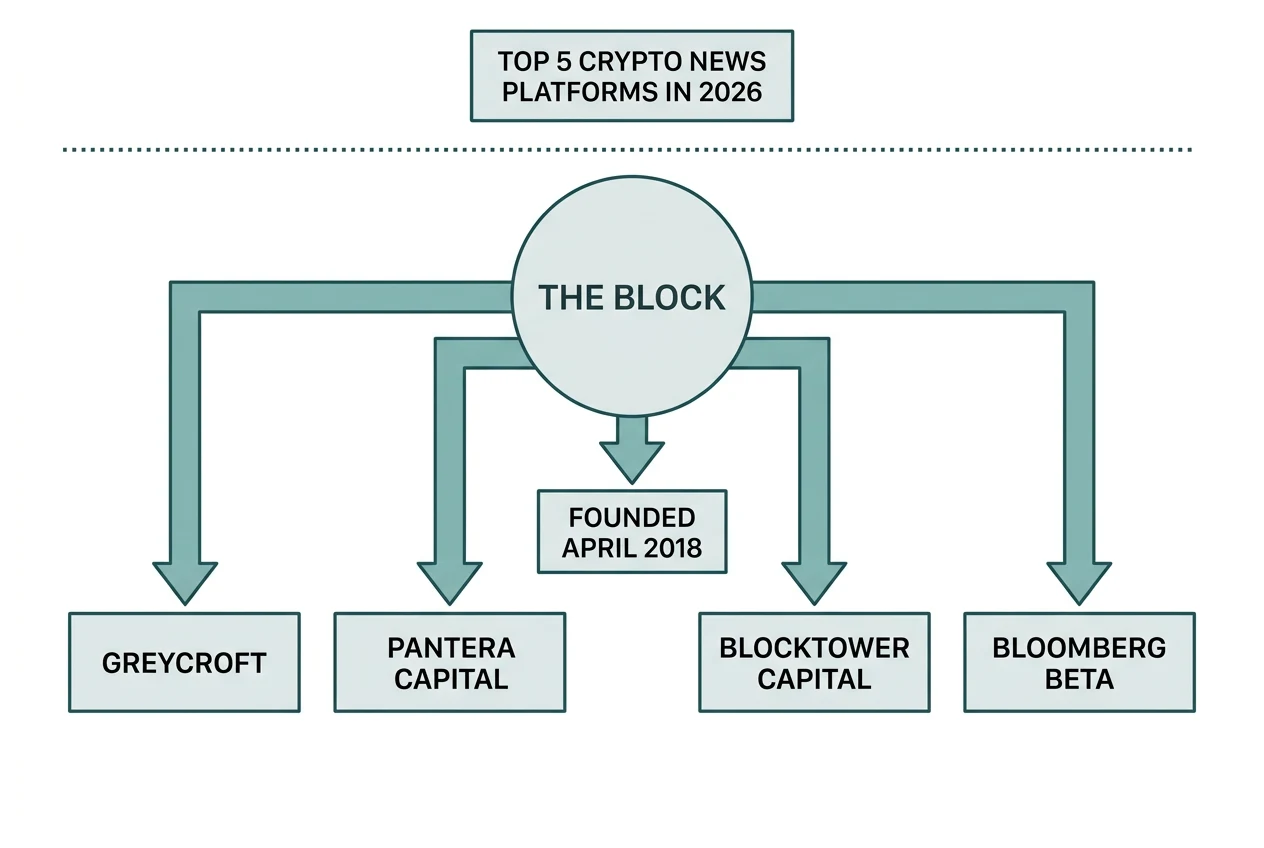
The Block was founded in April 2018 by Mike Dudas on $4 million from Greycroft, Pantera Capital, BlockTower Capital and Bloomberg Beta. The pitch was different from CoinDesk's or Cointelegraph's right from the start: fewer clickbait headlines, more data an analyst could actually cite in a report. Larry Cermak, who built out The Block's research arm, became CEO in 2023 after the outlet cut a third of its staff and Wintermute's Evgeny Gaevoy joined the board. Not long after, the company completed a management buyout. The Block now describes itself as the only employee-owned firm doing crypto research, news and information services.
That research pedigree shows up in the product. Its Data Dashboard covers everything from exchange volumes to stablecoin flows to DEX activity. Its paid Pro tier layers in datasets you genuinely can't get elsewhere, including feeds sourced from Grayscale and the blockchain forensics firm Chainalysis. An in-house data team vets it before it ever reaches a subscriber's dashboard.
What actually sets it apart: the Data Dashboard, and specifically the exclusive Grayscale and Chainalysis data behind the Pro tier, which is the kind of sourcing a retail-facing outlet doesn't bother building.
Socials: X at @TheBlockCo. Telegram: the news feed channel is @the_block_crypto.
4. Decrypt: the plain-English one
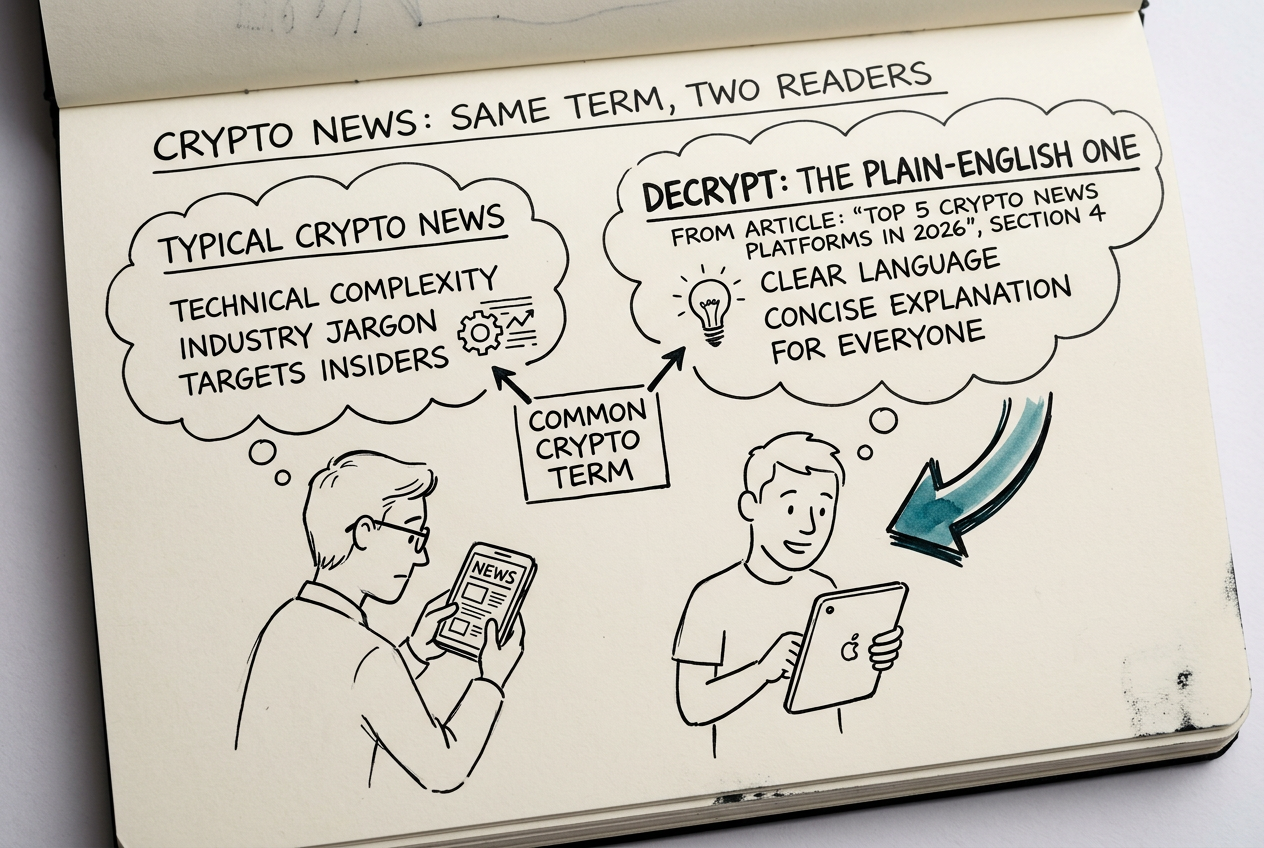
Decrypt was founded in 2018 by Josh Quittner, Ryan Bubinski and Ilan Hazan, incubated inside ConsenSys during what everyone now calls crypto winter. The mission statement has stayed consistent since: demystify the decentralized web without dumbing it down. In practice, a Decrypt story explains a term the first time it uses it. It won't assume you already know what a rollup or a rebase token is. That's exactly the gap CoinDesk and The Block don't bother closing for a newer reader.
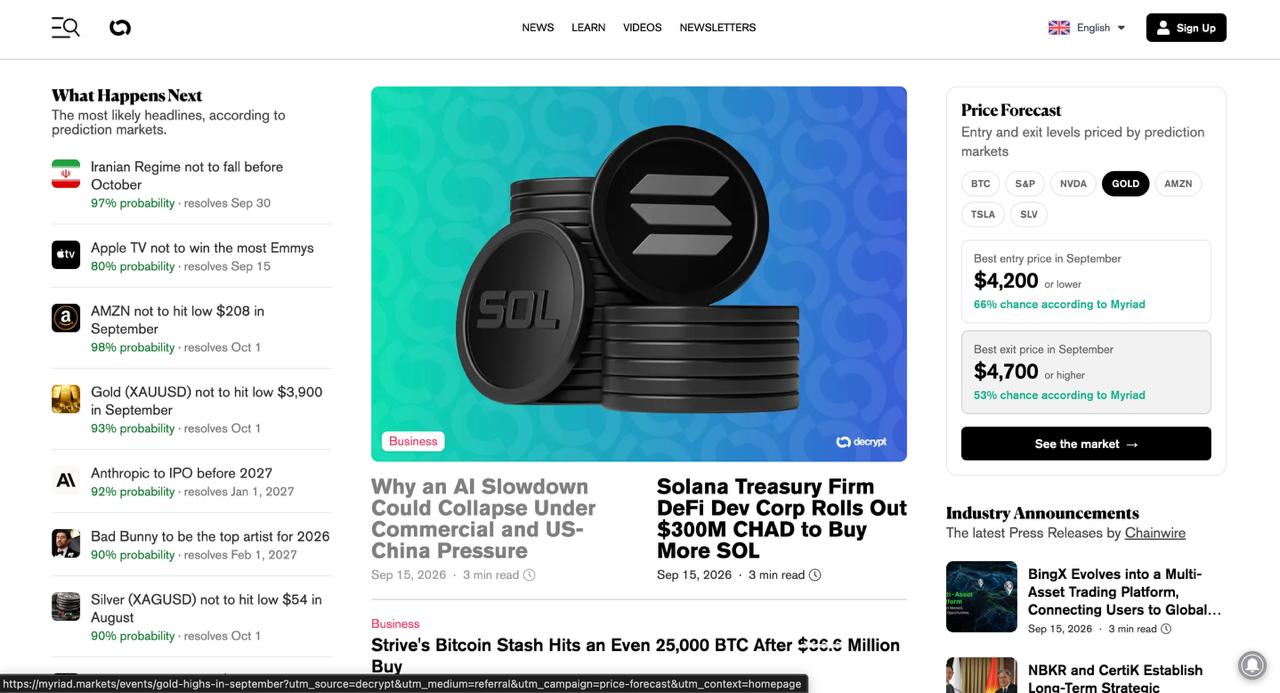
In January 2024, Decrypt merged with Rug Radio, a media company built around NFT-holder communities, to form a publishing venture called DASTAN. The two companies describe it as the largest decentralized publisher around. The practical effect for a reader is a stronger tilt toward NFTs and Web3 culture stories than you'll find on the other four platforms here.
What actually sets it apart: writing that assumes you're smart but new, plus the deepest NFT and Web3 culture coverage of the five.
Socials: X at @DecryptMedia. Telegram: the news channel is @DecryptNews.
5. CryptoPanic: the aggregator that scores the news instead of just reporting it
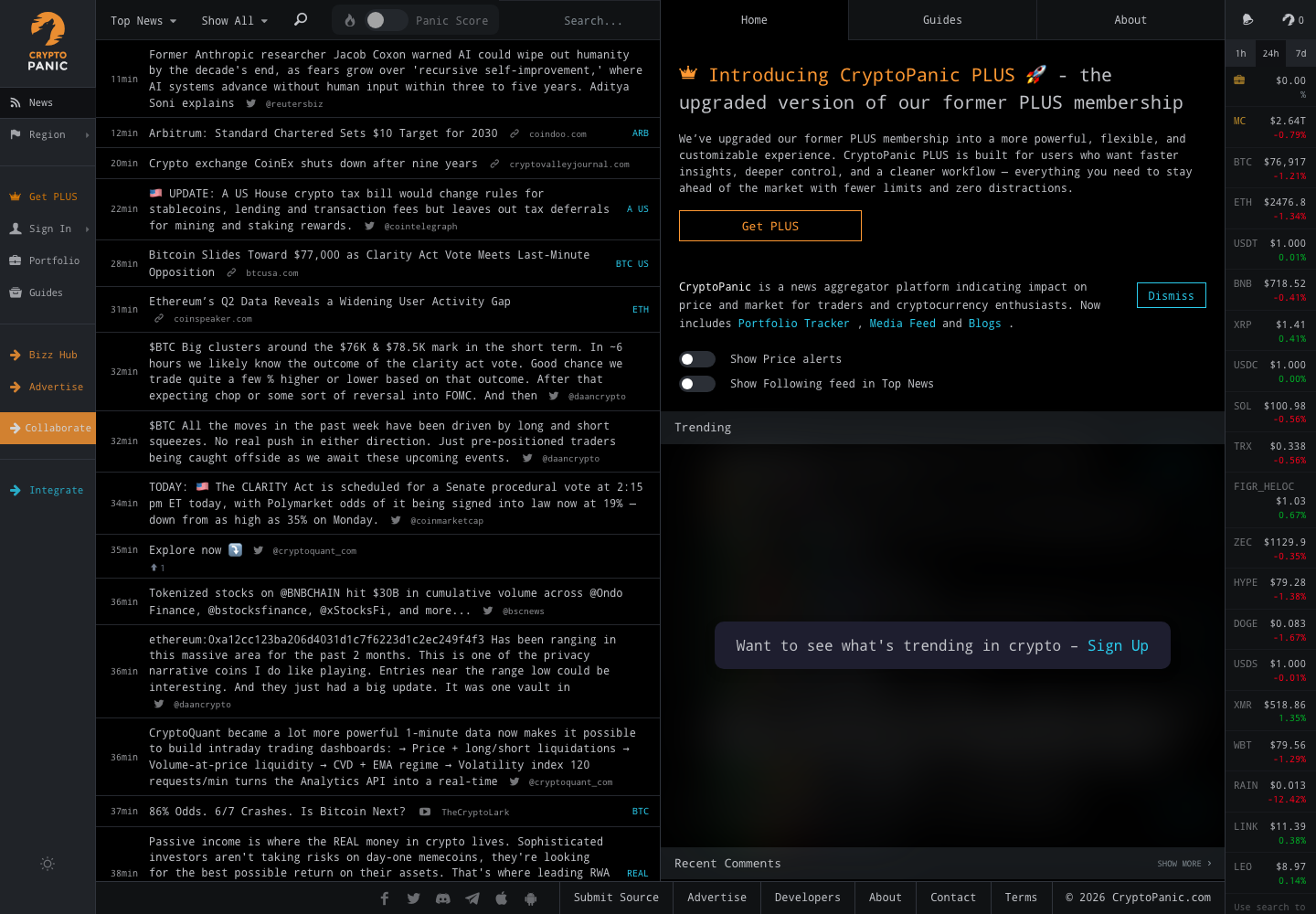
CryptoPanic, founded in 2017 by Kaspars Sprogis, isn't trying to be a newsroom at all. It's an aggregator that pulls headlines from hundreds of sources at once, including CoinDesk, Cointelegraph and everything smaller. You get one feed instead of four browser tabs. The feature that earns it a separate entry here is the voting system. Readers mark each headline as bullish, bearish, important, or toxic, and that crowd input rolls up into a "Panic Score", a rough, live sentiment gauge for the whole market.
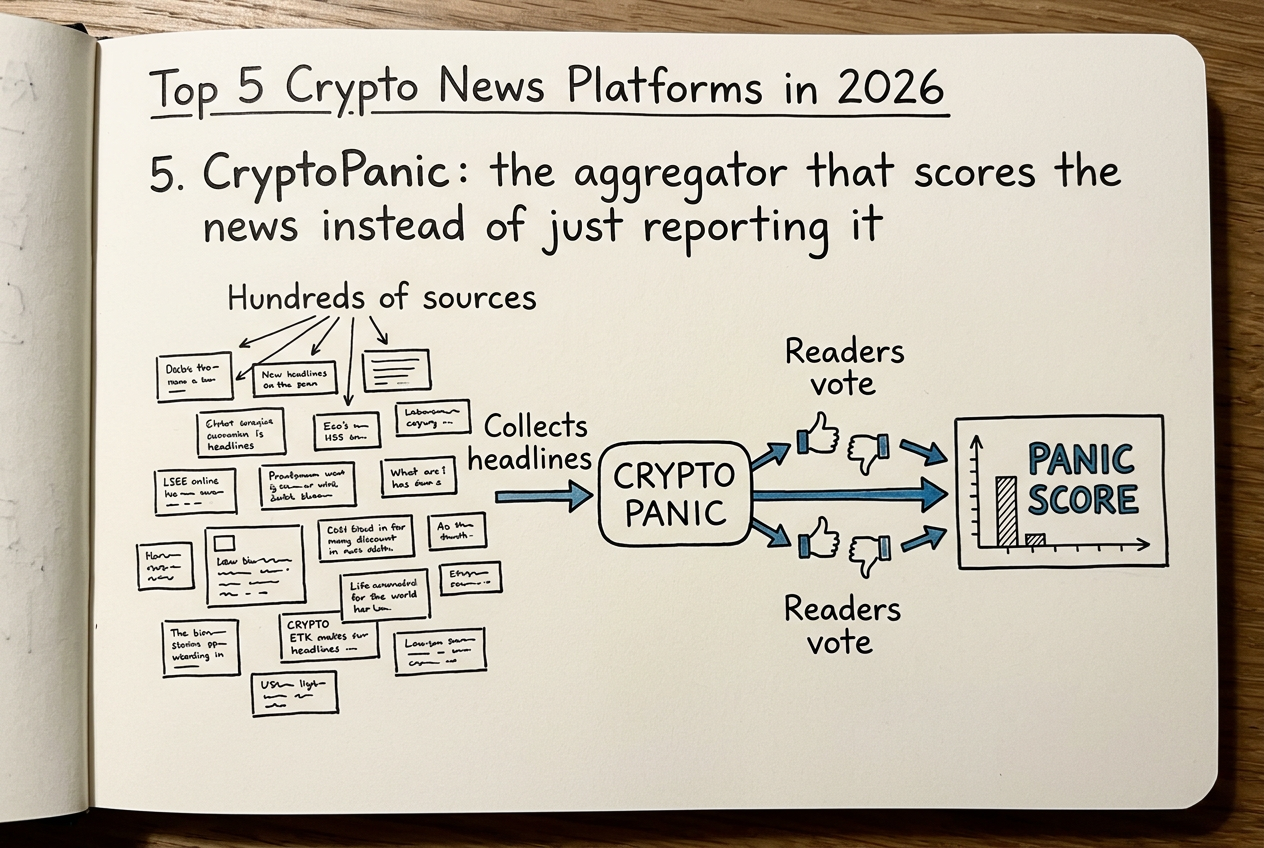
The free tier covers manual watchlists and the voting feed. The paid PLUS tier costs $9 a month or $99 a year. It adds automatic portfolio tracking synced across more than ten exchanges, a custom feed editor for folding in specific blogs or Reddit threads, and alerts tied to your own holdings instead of the whole market.
What actually sets it apart: it's the only platform on this list that isn't writing the news itself, and the Panic Score is a genuinely different way to read a headline than just reading it.
Socials: X at @CryptoPanicCom. Telegram: CryptoPanic runs an official community channel and a separate bot that can post price and news alerts directly into your own Telegram channel if you add it as an admin.
How the five compare
| Platform | Founded | Core strength | Best for | Telegram |
|---|---|---|---|---|
| CoinDesk | 2013 | Largest dedicated newsroom, live indices | Broad daily headline coverage | @CoinDeskGlobal |
| Cointelegraph | 2013 | 15-language global reach, visual style | Non-English readers, broad reach | @cointelegraph (340K+) |
| The Block | 2018 | Institutional-grade data, employee-owned | Analysts and researchers | @the_block_crypto |
| Decrypt | 2018 | Plain-English explainers, NFT/Web3 culture | Readers newer to crypto | @DecryptNews |
| CryptoPanic | 2017 | Aggregation plus crowd-sourced sentiment | Watching many sources at once | @CryptoPanicCom |
Which one should you actually follow
Most people end up running two. One broad wire for headlines, and CryptoPanic or a Telegram bot underneath it to catch anything the first one missed. If you're newer to crypto, start with Decrypt so the vocabulary doesn't get in the way. If you're already deep into on-chain metrics and want your news sourced the same way your data is, The Block earns the extra reading time.
News tells you what happened. It doesn't tell you whether the coin you're watching is actually oversold, or whether that headline lines up with a pattern already forming on the chart. That's a separate job, and it's the gap something like GeckoScreener is built to close. Once a headline moves a coin, you can screen the reaction against RSI, MACD and candlestick patterns across 100+ assets in the same table, instead of switching tabs to find out if the move is worth acting on.
GeckoScreener Team
Written for the GeckoScreener community. Join us on Telegram →
Related Articles
Start screening cryptocurrencies for free
Apply strategies like this one in real-time across 250+ coins.
Try GeckoScreener →